Image of Banner
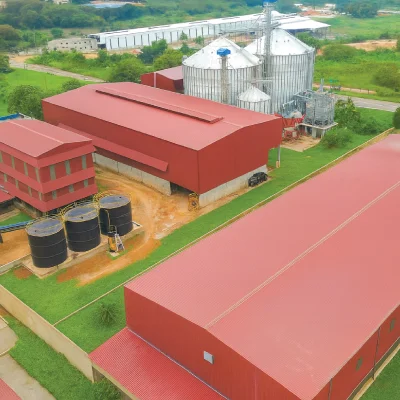
Solvent Extraction Plant Image

Oil Extraction

An oil extraction plant combines mechanical pressing and solvent extraction to maximize oil recovery from seeds like soybean, sunflower, rapeseed, cottonseed, groundnut, and rice bran. While the mechanical extraction extracts major portion of oil, solvent extraction efficiently recovers the remaining oil from the pressed cake. Together, they deliver higher yield, consistent quality, and cost-effective processing for modern edible oil industries.

The process typically follows two main routes

Mechanical Extraction (Pre-pressing + Solvent Extraction)

Used for high oil content seeds (e.g., sunflower, rapeseed, cottonseed, peanuts). Seeds are mechanically pressed first to remove a portion of the oil, and the partially de-oiled cake is sent for solvent extraction

Solvent Extraction (Continuous Solvent Extraction)

Used for low oil-bearing materials (e.g., soybean, rice bran). The prepared flakes are directly extracted in solvent extractor without mechanical pressing
Mechanical Extraction Plant

Mechanical Extraction Plant image

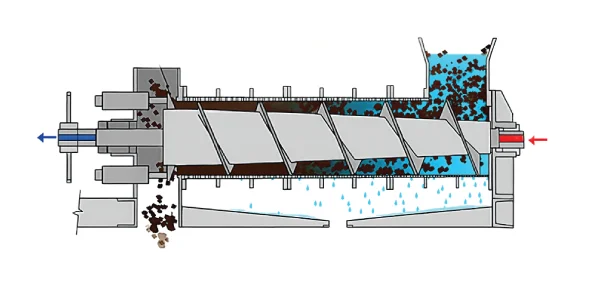
Mechanical extraction, also known as pre-pressing or expelling, is the traditional method of oil extraction from high oil-bearing seeds such as sunflower, groundnut, rapeseed, sesame, and cottonseed. The process involves applying high mechanical pressure to prepared seeds using oil expellers to recover a portion of the oil. The partially de-oiled cake can either be used directly for animal feed or sent to a solvent extraction plant for further oil recovery

Process Flow:

  • Seed Cleaning & Conditioning: Removal of impurities, adjustment of moisture & temperature.
  • Cracking & Flaking: Seeds are cracked and flaked to rupture oil-bearing cells.
  • Cooking/Conditioning: Improves oil release and reduces anti-nutritional factors.
  • Mechanical Pressing: Oil expellers extract 70–75% of oil content, leaving 15–20% oil in the cake.
  • Filtration & Storage: Extracted crude oil is filtered and stored for refining.

Advantages

Robust and simple technology with low power consumption
Ideal for medium-scale operations
Produces partially de-oiled cake suitable for cattle feed
Can be integrated with solvent extraction for maximum oil recovery
Continuous Solvent Extraction Plant (SEP)

Continuous Solvent Extraction Plant (SAP) image

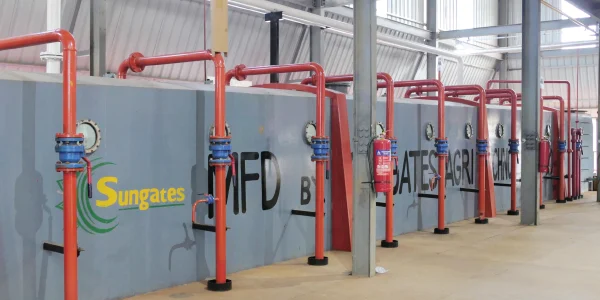
A Solvent Extraction Plant (SEP) is a highly efficient system designed to extract edible oils from oil-bearing materials such as soybean, sunflower, rapeseed, cottonseed, rice bran, and other oilseeds. Unlike mechanical pressing, solvent extraction ensures maximum recovery of oil with higher yield and lower residual oil content in the meal. It is the most preferred process in modern edible oil industries for handling large capacities with consistent quality.

Extraction Section

The extraction unit is the heart of a solvent extraction plant. It separates oil from the prepared flakes or pre-pressed cake using food-grade hexane as solvent.

Working Principle:

  • Material is continuously fed into the extractor bed.
  • Hexane is sprayed in multiple stages, percolating through the bed and dissolving oil.
  • Counter-current flow between solid material and solvent ensures maximum oil recovery.
  • The outlet product streams are: Miscella (mixture of oil + solvent), De-oiled meal (with small solvent traces).

Features:

  • Continuous operation.
  • Low solvent consumption.
  • Efficient miscella circulation system.
  • Robust construction to prevent solvent leakage.

Types of Extractors

RoGates Extractor (circular design) – Best for pre-pressed cakes.
Loop/Chain Extractor (rectangular design) – Preferred for rice bran & soy flakes.
Miscella Distillation System

Mechanical Extraction Plant image

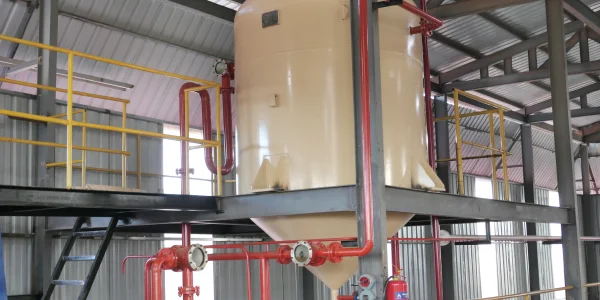
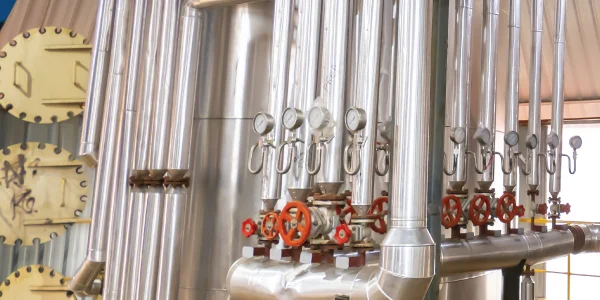
The miscella from the extractor contains 12–30% oil and 70–88% solvent. The goal is to separate solvent from oil efficiently

Process:

  • 1st Effect Evaporator: Removes bulk solvent under vacuum at low temperature
  • 2nd Effect Evaporator: Further concentrates miscella by evaporating more solvent
  • Final Oil Stripper (Steam Stripping): Direct steam is injected into the concentrated miscella to strip off residual solvent

Features:

  • Crude oil with <500 ppm solvent (safe for storage & refining)
  • Recovered solvent vapor sent to recovery system.

Key Advantages

Gentle heating prevents oil degradation
Multi-effect evaporation reduces energy consumption
 DTDC (Desolventizer-Toaster-Dryer-Cooler)

Mechanical Extraction Plant image

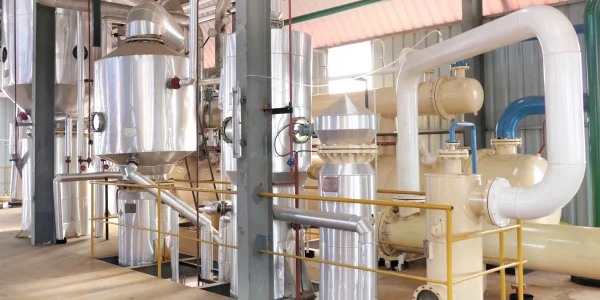
The DTDC is a multi-tray vertical vessel where de-oiled meal from extractor is treated.

Features:

  • Desolventizing: Live steam removes residual solvent from meal.
  • Toasting: Heat treatment destroys anti-nutritional factors (e.g., trypsin inhibitors in soybean).
  • Drying:Reduces meal moisture to safe storage level (~10–12%)
  • Cooling: Brings down temperature for safe handling & storage.

End Product:

  • Protein-rich de-oiled meal suitable for poultry, cattle, and aquaculture feed.

Design Features

Stainless steel trays with steam jackets
Controlled steam injection to avoid nutrient loss
Solvent-free DOC (< 200 ppm hexane)
Evaporators & Oil Strippers

Mechanical Extraction Plant image

These are part of miscella distillation but deserve separate mention
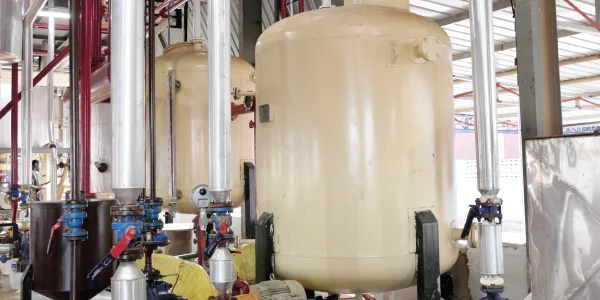
Evaporators:

  • Rising Film / Falling Film design.
  • Work under vacuum to avoid oil oxidation.
  • Recover 90–95% of solvent before final stripping.

Oil Stripper:

  • Vertical vessel where direct steam is injected.
  • Final traces of solvent are removed from concentrated miscella.
  • Produces crude oil with food-grade safety standards.

 Solvent Recovery System

Mechanical Extraction Plant image

Solvent recovery is critical for safety, efficiency, and cost savings.
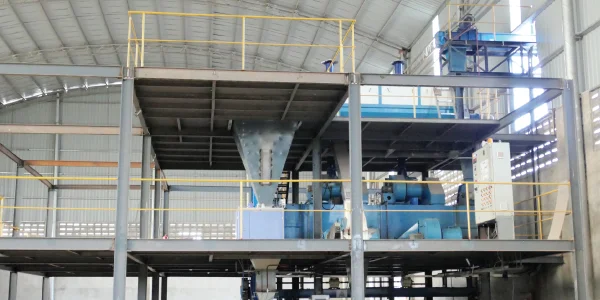
Functions:

  • Condensers: Cool and condense solvent vapors from extractor, evaporators, and DTDC.
  • Solvent–Water Separators: Separate condensed solvent from water (hexane is lighter and floats).
  • Absorbers (Mineral Oil Tower): Recover solvent vapors that escape with vent gases using circulating mineral oil.
  • Final Recovery Tank: Collects and recycles solvent back to extractor.

Efficiency:

  • Solvent losses <0.2–0.3 kg/ton of raw material processed.
  • Closed-loop design ensures minimal environmental impact.

 Meal Cooling & Storage

Mechanical Extraction Plant image

Once meal exits the DTDC, it must be cooled before packing or storage.

Meal Cooler:

  • Counter-current air flow cooler reduces meal temperature close to ambient.
  • Prevents lumping, mold growth, and protein degradation.
  • Recover 90–95% of solvent before final stripping.

Storage System:

  • Day Bins For DOC Storage.
  • Equipped with aeration system to maintain quality.
Get in Touch Today

Looking to increase your oil extraction operations? Contact us immediately to discuss your project expressing your concerns and apprehensions. We will solve each one of them. clearing your way. Join the elite engineering group to witness what we speak and let us deliver innovative, high-performance solutions tailored to your needs.

to-top